An unusual survival
Two devotional functions, preserved together.
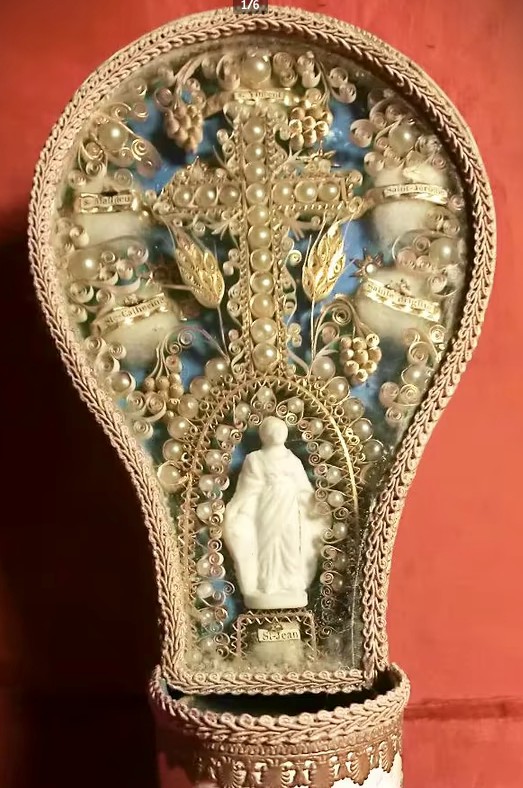
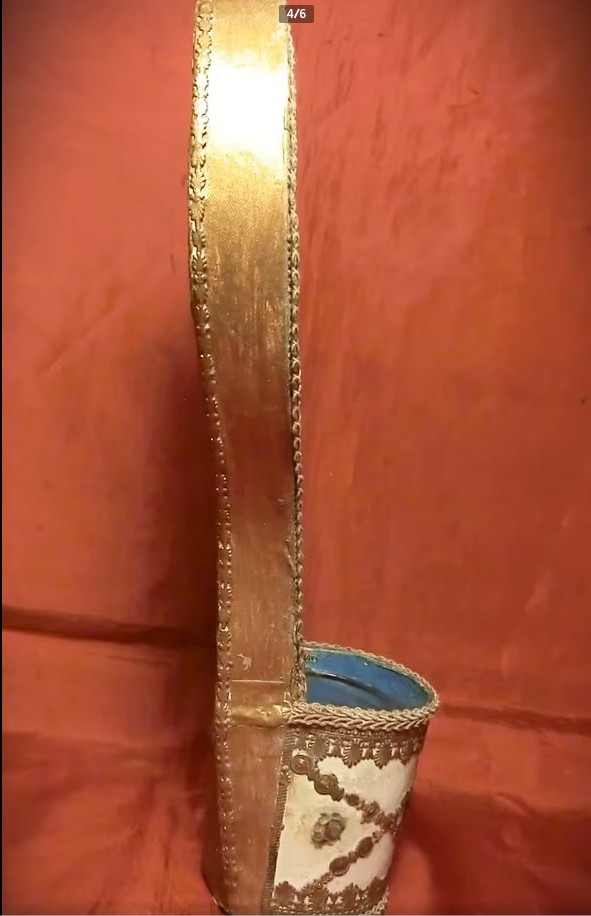
The object is a rare wall-mounted holy-water font incorporating a reliquary à paperoles. The union of a bénitier and a reliquary within a single ensemble is unusual. The survival of both devotional functions gives the work particular historical and spiritual significance.
It is tentatively attributed to a female conventual workshop in the County of Nice or eastern Provence and dated approximately between 1780 and 1830.
The art of paperoles
Devotion expressed through patience and minute workmanship.
Its ornament belongs to the paperoles tradition. Narrow strips of gilded, coloured and silvered paper were rolled, curled and assembled into delicate scrolls, foliage, flowers, stars and architectural forms.
This painstaking devotional craft was especially associated with enclosed female religious communities during the seventeenth, eighteenth and early nineteenth centuries. Here, the paper filigree surrounds a small polychrome devotional statuette and a series of relic compartments, creating a composition intended not merely to be admired, but contemplated.
Materials and inscriptions
A complex work, carefully considered.
The composition includes rolled and gilded paper filigree, glass, a textile-covered reverse, gilded metal elements, a painted wooden support, dozens of antique non-cultured saltwater pearls and a small polychrome statuette whose precise material remains to be confirmed through specialist examination.
Handwritten cartouches identify relics associated with several saints, including Saint Vincent, Saint Matthew, Saint Jerome, Saint Catherine, Saint Bridget and Saint John, together with others.
At the time of assessment, the reliquary was preserved in good overall condition, retaining an age-appropriate patina and showing no evident invasive restoration.